
This is the psalm that my pop, the preacher, quoted most often in his sermons; and I heard all of them over the last 18 years of his evangelical ministry — well, once I was old enough not to fall asleep in the pew. “Purge me with hyssop,” Dad would declaim, “and I shall be clean: wash me, and I shall be whiter than snow.” He never said what hyssop was or how it was used in a purge.
One learns from any good reference Bible — or from the Rev. Dr. Google — that hyssop was a plant that ancient Israelite priests used in ritual cleansings. According to Leviticus, they’d dip a handful of hyssop sprigs into the blood of a sacrificial animal, then “cleanse” the penitent person with that blood. Also, some sources claim that hyssop had medicinal value, almost like penicillin.
Something else that I don’t remember my old man explaining was that the anguished speaker of this psalm is King David himself, not long after he got caught committing adultery with a bathing beauty named Bathsheba. He also had her husband, a great soldier in David’s own army, killed. YHWH sent an old prophet to scold the king. (Gee, why didn’t YHWH rebuke the king Himself?)
Anyway, a problem I have with this psalm is that it’s called “The Sinner’s Guide” to repentance, according to great old preachers like Charles Spurgeon (who, by the way, was my grandfather’s namesake, which maybe explains why my father liked this psalm so much). “Against You, You only have I sinned,” David prays. But that’s not true — no, not at all — not in this time of MeToo.
David didn’t just sin against his god — in other words, against the conscience of his culture. He also sinned against the powerless woman who had no choice but to have sex with the king. He sinned against her husband, whose death he all but guaranteed. (Why didn’t YHWH intervene?) And he sinned against their lovechild whom YHWH made to grow ill and die to make David cry.
Old King David must have been a real piece of work — a war hero, sure, but also an adulterer, a murderer, an eater of holy bread meant only for priests, and a first-class narcissist to boot. (Cain was cursed for his offering of grain; David was blessed for eating the temple’s shewbread.) Yes, even a self-centered king needs to own up to his evil ways, ask forgiveness, and make amends.
After reading this psalm several times, it hit me: These are the literal words of YHWH, the god of Abraham, Isaac and Jacob. I mean, his speech is presented in quotation marks, from verse 5 to verse 23 at the very end of the psalm. This isn’t some disembodied voice in a primordial garden; or from a burning bush; or from the midst of a whirlwind. This is a fiery god who has a lot to say.
I wonder how this psalmist decided it was OK to put so many words in the Mighty One’s mouth.
His first topic is the blood sacrifice, specifically burnt offerings — and he’s talking animals here, not humans. Let’s see now. He lists bulls and goats, in particular, but he also says he owns all the animals on earth — all the cattle, birds and wild beasts — and so this kind of offering is not accepted unless the penitent also gives thanks and begs for pardon. Roast beast isn’t enough.
I wonder why burning another being’s flesh and drinking its blood was ever seen as an offering.
YHWH goes on to say he lets wicked people make meaningless sacrifices all the time, and that they are as bad as thieves, adulterers, liars, and slanderers — you know, all the rotten, stinking things that even hypocritical leaders seem to get away with doing. Their followers just hold their noses. “I will rebuke you,” YHWH finally tells them, “and set [things straight] before your eyes.”
I wonder why YHWH had those laws — eat this, drink that — but wasn’t quick to enforce them.
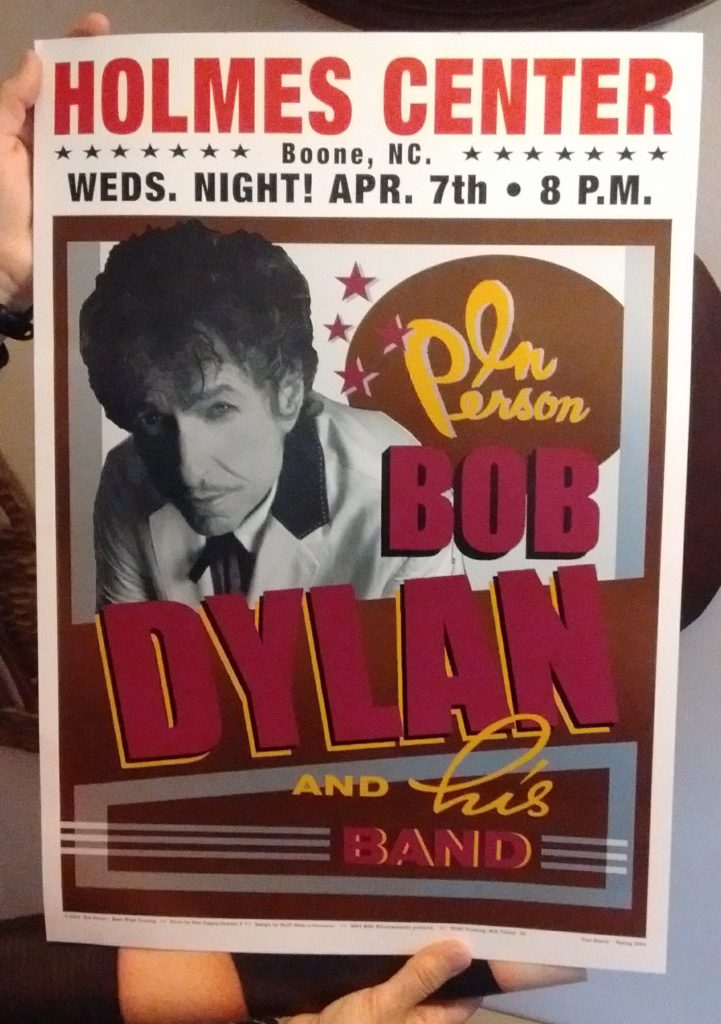
The Old Hebrew (or Paleo-Hebrew) psalmists were the rock stars of their day — the first Jewish singer-songwriters, ancestors of guitar-slingers like Paul Simon, Neil Diamond and Robert Allen Zimmerman. Everybody loved their chart-topping psalms — the beautiful people, working-class heroes, rich country clubbers and plain ol’ poor folks. But these guys didn’t play six- or 12-string Martins and Gibsons. Their axes were kinnors (also called lyres, or harps) and had 3-22 strings.
This psalm is a dark one — more goth, emo or grunge than a song of praise — a mashup of all the Paleo-Hebrew hits, like “The Devil Went Down to Gaza,” “Everybody Wants to Rule Judea,” and that confessional classic, “I’ve Seen Fire and Brimstone.” The oft-repeated refrain reminds us that we all will die, and that we’ll take nothing with us, not even if we’re as funky as King Tut. It’s like blessing the beasts and children with no voices, no choices and darkness all around us.
This psalm is about a shining city on a hill, where the god of the people resides. It’s talking about Jerusalem, of course, but this place could also be Washington, D.C., as was one old president’s view, or maybe Sao Paulo or Timbuktu. Oh, I don’t know. Are there hills in Brazil?
While I’m at it, why do gods always prefer the mountains to the ocean? I mean, there’s Mount Olympus, Mount Sinai, Mount Zion and Mount Rushmore. Also, Carmel, Moriah, Tabor and Horeb. Mount of Transfiguration, Mountain of Light, Machu Picchu and Gang Rinpoche, right?
And why do our gods need temples and palaces? Do we? I’ve lived as a privileged hillbilly in a mountain cabin, and as a beach bum on the dole. I’ve seen a little brown church in a vale and a solitary cross in the dunes. High country, low country, rich, poor — it’s all the same to the iSoul.
Nature is our sanctuary and comfort when life begins to suck. It’s counter-intuitive, but we don’t have to fear earthquakes or tsunamis, because the wholly universal spirit — of which we are a part — encompasses all that is “good” and “bad” on earth all the time.
The iSoul is like not just a river, but more like the whole watershed — the trickling springs, the babbling brooks, the rocky creeks, and the lazy rivers that flow into the distant ocean. But most governments don’t understand how “climate change” figures into that.
Yeah, shit happens, as far as nature is concerned. The earth shakes, the lowlands flood, flames scorch the earth where sparks find tinder and wind. But we make so many choices — war being one such option — that make natural disasters more or less bearable.
If we weren’t fighting one another over wealth or power or beliefs, we all could work together to make every single person’s world a better place in which to live. The poor or powerless or other kind of believer wouldn’t be forced to live in the “worst” places on earth.
And we could then turn our attention to real problems, like how we can become faithful keepers of this world that some true believers say has been entrusted to us by their god (though they do much to deny that claim). What we value the least we will definitely lose.
Yes, even 3,000 years ago, people were keeping up with the Kardashians, or the Kennedys, or, in this psalm’s case, the King and his royal court. This “song of love” is so fawning that its writer couldn’t say enough good stuff about the King, Queen and their kids — a Hebrew Robin Leach.
This hunky King — with his long sword and heart-piercing arrows — sits on his throne, gripping his huge scepter and wearing great-smelling duds. He lives in actual ivory palaces — more than one, no kidding — and other kings’ daughters wait on him hand and foot. This dude has it made.
He has a hot queen who is loved by all the rich and famous in the land. Their beautiful daughter has the best clothes and the best friends. And the royal couple has many sons to help them rule the world. Champagne wishes and caviar dreams, indeed — with a supersized order of idolatry.
This is yet another longish psalm of war; however, it’s remarkable for one big difference from the others so far — this psalmist admits that his nation ain’t what it used to be on the battlefield and that his people have become “a reproach to our neighbors, / A scorn and a derision to those all around us” and “a byword among the nations, / A shaking of the head among the peoples.” Huh.
This guy starts out like the blowhard who brags that the United States has never lost a war. But then someone whips out their trusty cell phone and fact-checks him in real time on Wikipedia. It says the USA has lost — that’s right, lost — 11 wars and has been involved in 11 others whose outcomes were inconclusive. And some losses and draws occurred long before the Korean War.
So this psalmist must face the truth — something our boastful bigmouth will never do — and he questions why all this rotten luck has befallen him and his people. I’m the same warrior poet I’ve always been, he says. We all follow every inscrutable rule we’re supposed to, he says. And still we’re “killed all day long; / We are accounted as sheep for the slaughter.” Uh, everyone but him.
When it comes to politics, I’m right that some populist movements are just plain wrong. In fact, what’s called Christian nationalism really isn’t Christian at all. As for another disgusting movement, I agree with the psalmist’s words: “Oh, deliver me from the deceitful and unjust man!” And you know exactly who he means.
When the truth, the whole truth and nothing but the truth finally comes to light, the good people will return to that shining city on a hill; and they will occupy our most sacred secular house, and live out the true meaning of the creed, “This land was made for you and me.” Maybe we, the people, will get it right again.