This is a short psalm — only five verses. The overarching — or, in this case, overriding — image is of water — that YHWH is more powerful than the great sea billows that roll, than the mightiest tsunamis that cross the wide oceans, than the monster swells that only the best surfers can ride.
This psalm is called “A Song for the Sabbath day,” which we missed by a day or two, depending on one’s religious persuasion. However, what this psalmist — presumably David — has to share really isn’t that different from the psalms he sings any other day of the week. Here’s a summary:
Thank you, Lord, for being so great! And thanks for favoring me over everyone else. Let me sing you a song. O Lord, I forgot to capitalize those references to You. But You’ll forgive me, I’m sure. And while I’m playing my harp for You, how about smiting our enemies? Smite them good, Lord.
Like I was saying, You are kind, You are smart, and You are important — and I am special. Men like me “flourish like a palm tree, / [and] grow like a cedar in Lebanon.” And we “still bear fruit in old age.” You’re my rock, Lord. O, by the way, are You finished with all that Sabbath smiting yet?
The line that jumped out at me in this psalm was YHWH’s pledge to reward his followers not with afterlife in heaven, but with long life on earth — a direct quote from YAH Himself.
“Because [My follower] has set his love upon Me,” says YHWH, “therefore I will deliver him. … I will be with him in trouble. … With long life I will satisfy him, / And show him … salvation.”
So let me get this straight: In simplest terms, our righteousness may be measured by our age? Is the flipside of YHWH’S promise true — that only the bad die young? So insulting.
I was raised to be a fundamentalist Christian like my father — the one here on earth, not the one in heaven — and so was my brother, who was a better little guy than I will ever be.
He was diagnosed with cancer in October of 1976 and died less than four months later. He was 10 years old. Does his death at that age imply he wasn’t a good Christian soldier?
Now, I understand that the Jews back then — like King David and his wise son Solomon — had different values and beliefs than Christ’s current followers. But Jesus was a Jew, right?
And didn’t Jesus himself say that his mission wasn’t to change Jewish laws and teachings, but to make them mean something? Didn’t he die young decrying the shams of “good men”?
So when I read YHWH’s own words equating long life with righteousness — in the unerring, sacred book of Bible thumpers — I’m sure He was dead wrong about at least one little man.
This is the one and only psalm attributed to Moses — yes, that Moses, the really old one known for the Bulrushers and for parting the Red Sea, not Moses Malone or Woody Allen’s son, Moses Farrow, or even Grandma Moses, although she was sharp enough to create something like this.
Some folks say this is the oldest psalm of all 150, but then why is it No. 90, the first in the fourth book of the Psalter? (So I’m three-fifths of the way done with this project — only 60 more poems to go — and I will finish the whole kit and caboodle on Good Friday 2024, with a little good luck.)
This is an oft-quoted psalm, because Moses — or whoever wrote it — was a better writer and a lot more quotable than whiny-ass David: “For a thousand years in Your sight / Are like yesterday when it is past, / And like a watch in the night.” David would have made this song about himself.
Then Moses compares the days of our lives, no, not to sand in an hourglass, but to green grass that springs up and thrives in the sun by day, then in the cool of the evening is mown down and left to fade and blow away. I’m thinking Uncle Walt had this psalm in mind with Leaves of Grass.
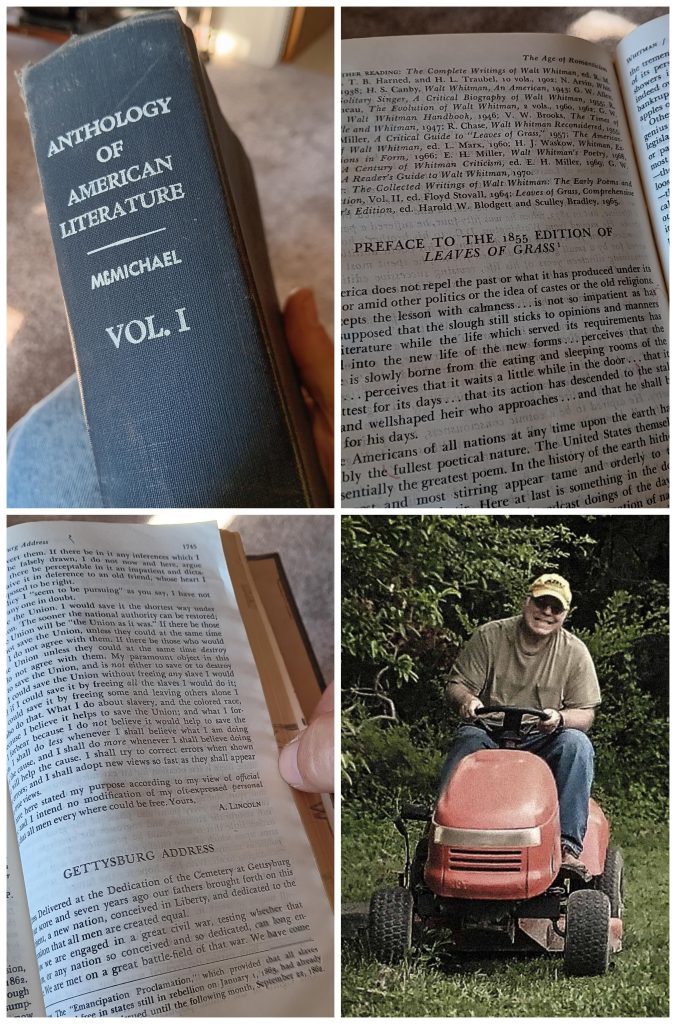
This particular psalm also discusses the average man’s lifespan — “threescore years and ten … [or] fourscore years,” in the King James Version (no, not Lebron James); that’s 70 or 80 years in other bibles. Maybe Honest Abe read this psalm on his way to Gettysburg in November of 1863.
Keep in mind that Moses lived almost 4,000 years ago. Some things never change, except that the average man’s life expectancy is closer to 70 while the average woman’s is almost 80, says Dr. Google. No psalmists — not even Moses — have differentiated between the genders so far.
Be that as it may, the famous prophet asks YHWH: “So teach us to number our days, / That we may gain a heart of wisdom.” Whatever our gender or religion or place in life, that’s a lesson we all should internalize — to know exactly where we stand before we see that lawnmower coming.
This is a long, bootlicking psalm written by a young guy named Ethan the Ezrahite. Basically, he was to his king what MAGA pundits and plotters are to their preferred president: a propagandist.
According to Wikipedia — the last word on all things, until the article’s next edit — Ethan was “a boy at King David’s court well known for his wisdom.” Well, he knew how to shovel shit, anyway.
In a nutshell, Ethan’s 52 verses claim that all-powerful YHWH chose David and his descendants to rule Israel forevermore, and that anyone who opposes David’s reign also opposes YAH’s will.
And so, erudite little Ethan wants to know why YHWH won’t just smack David’s enemies down. “How long, Lord?” Ethan poses. “Will You hide Yourself forever? / Will Your wrath burn like fire?”
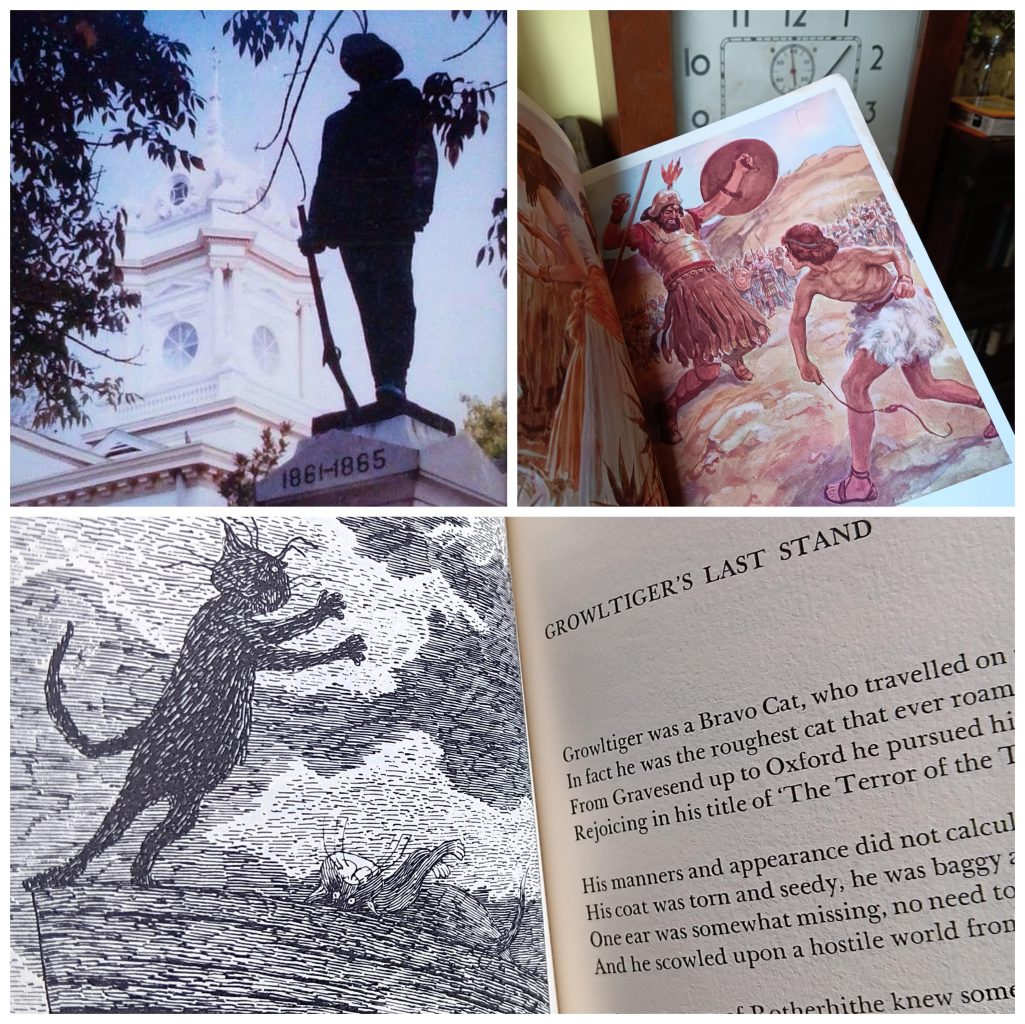
There are so many contentions in this screed that I could jump on, but the worst idea deals with why YHWH ever chose David to be king. Spoiler alert: Little David rocked big ol’ Goliath’s world.
“I have given help to one who is mighty,” says Lord YHWH. “I have exalted one chosen from the people.” (That’s “from,” not “by,” in case you were thinking that YAH might advocate democracy.)
So, might does make right? Is that our lesson here? I mean, I’m not a policy geek like Ethan the Ezrahite, but didn’t YAH also say, “The meek shall inherit the earth” and “Turn the other cheek”?
Without a doubt, this is the most depressing psalm I’ve ever read, written by an old guy named Heman the Ezrahite, a son of Korah. Like Asaph, Heman was one of David’s main musicians and prophets.
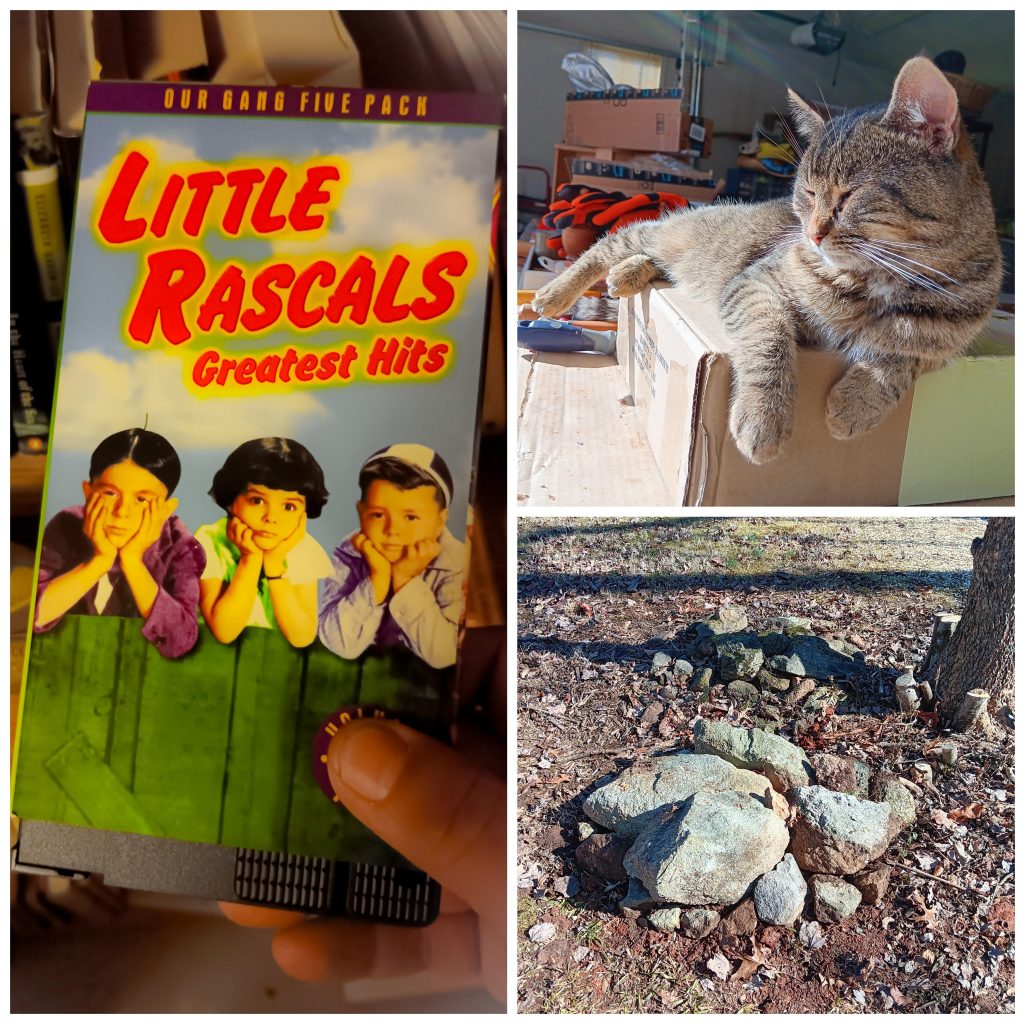
When I saw ol’ Heman’s name, what popped into my ol’ noggin was Alfalfa Schwitzer and Spanky McFarland’s He-Man Woman-Haters Club in an Our Gang comedy that cowboy Fred Kirby would show.
But this Heman is seriously depressed about his lot in life, and I don’t think his despair has to do with a woman — not even one who might have tried to turn him into a pillar of salt like Lot’s wife.
No, he feels as if YHWH doesn’t give a shit about him, even though he prays to YAH every day and every night for deliverance. He says he’s dead to YHWH, a person “whom You remember no more.”
He calls death “the land of forgetfulness” with no afterlife, not even one of simple remembrance by friends and family. I know how poor Heman feels, today of all days. I’m reminded every dark January.
And finally, “Your terrors have cut me off; / They came around me all day long like water; / [and] engulfed me altogether. / Loved one and friend You have put far from me, / [and] into darkness.”
That’s how this sad psalm ends — with no hope, in utter despair, because this real Heman’s prayers all go unanswered by a jealous, capricious, tribal god who “gives a damn” but has forgotten how to care.
The megalomaniacal king returns with this psalm called “A Prayer of David.” Despite what the Rev. Spurgeon calls humility, this is a list of demands: “Preserve my life,” says the king; “Save Your servant”; “Be merciful to me” — 15 demands in all, in a psalm that is only 17 verses long.
Yeah, sure, there’s also plenty of apple-polishing going on here, like, “Among the gods there is none like You, O Lord” — again, another admission that gods other than YHWH existed in King David’s cosmology. So I imagine a fundamentalist reads that part of the Bible literally, too, huh?
And in his most tiresome way, David whines that “the proud have risen against me, / And a mob of violent men have sought my life … / Show me a sign for good, / That those who hate me may see it and be ashamed, / Because You, Lord, have helped me and comforted me.” Brown-noser.
Like few others so far, this psalm plainly shows why state religion — Christian nationalism being the lunacy du jour — is ungodly. Who decides which god is worshiped or not? Who spots every sign and declares it good or bad? Who judges right and wrong? Why, the lunatic king, of course.
When it comes to life, the sons of Korah are positive thinkers, as they’ve got to admit it’s getting better, a little better all the time. “Mercy and truth have met together,” they sing. “Righteousness and peace have kissed.” Basically the boys are saying that everything has come together again.
But remember, these are the boys whose family was cursed. Once their father, their mother and their siblings fell to their deaths in the dark crevasse that YHWH had dug just for them, the lives of these surviving sons — as four other fabulous lads would later sing — couldn’t get no worse.