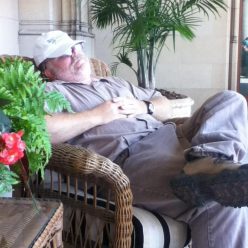
By RAHN ADAMS
MORGANTON, N.C. (March 18, 2026) – Last weekend we attended the funeral of my wife Timberley’s aunt at a country church where I’d forgotten that my own kinfolk had been members long ago.
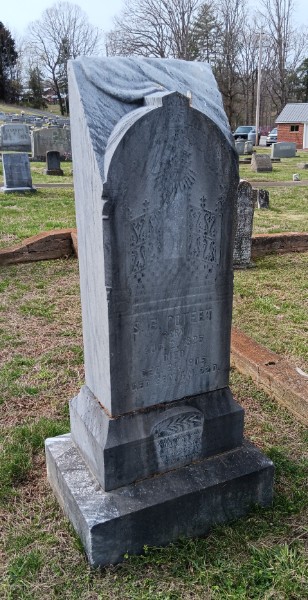
In the hillside cemetery next to the old church — established before the Civil War — I happened upon the graves of my maternal great-great-grandparents, my great-grandparents and other close kin.
This was in the Enola community about five miles from Morganton at the edge of the South Mountains. An old wives’ tale says that this community around Yellow Gap got its name — alone backwards— because it was so isolated and sparsely populated, and because there was nothing much to do there. It’s still that way.
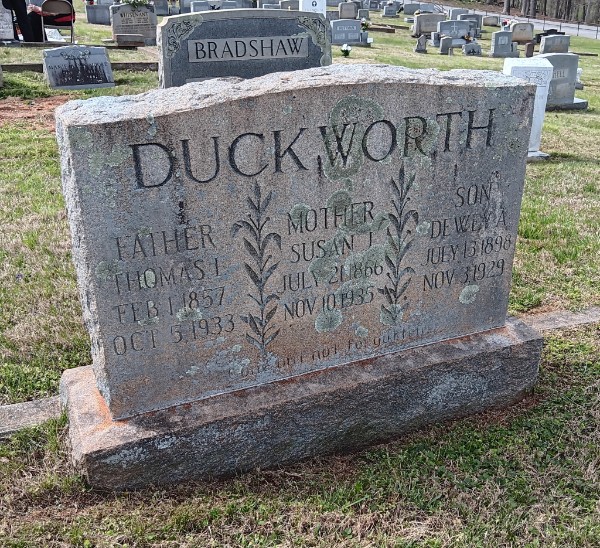
Yes, my great-great-grandfather Sidney Poteet, the pater familias of one whole Poteet/Poteat clan in Burke County, and my great-grandfather Tom Duckworth, who had married one of Sidney’s daughters and moved our branch of the family tree to the Hopewell community closer to town, are both buried there at Pleasant Hill Baptist Church, even though they had been prosperous landowners and storekeepers in their respective sections of the county.
The fact that Grandpa Tom — all he was ever called around me — Granny Susan, and my great-uncle Dewey (who dropped dead at 31 while walking in the woods one day) were buried at Pleasant Hill and not at Hopewell Baptist Church or Salem Methodist Church did surprise me, but that wasn’t all.
As it turns out, I learned that I’m related by blood not to the lady who had just died — to Timberley’s aunt — but to her late husband and their surviving children, Timberley’s first cousins. The funeral turned out to be a true family reunion … for me and my newfound (or long-lost) distant cousins, as well as for the aunt’s other relatives.
That’s not really what I want to write about today, though. Not about honoring our fathers and mothers, uncles and aunts. Well, not exactly. I’m thinking more about respecting one’s heritage, even when aspects of it deserve no respect at all.
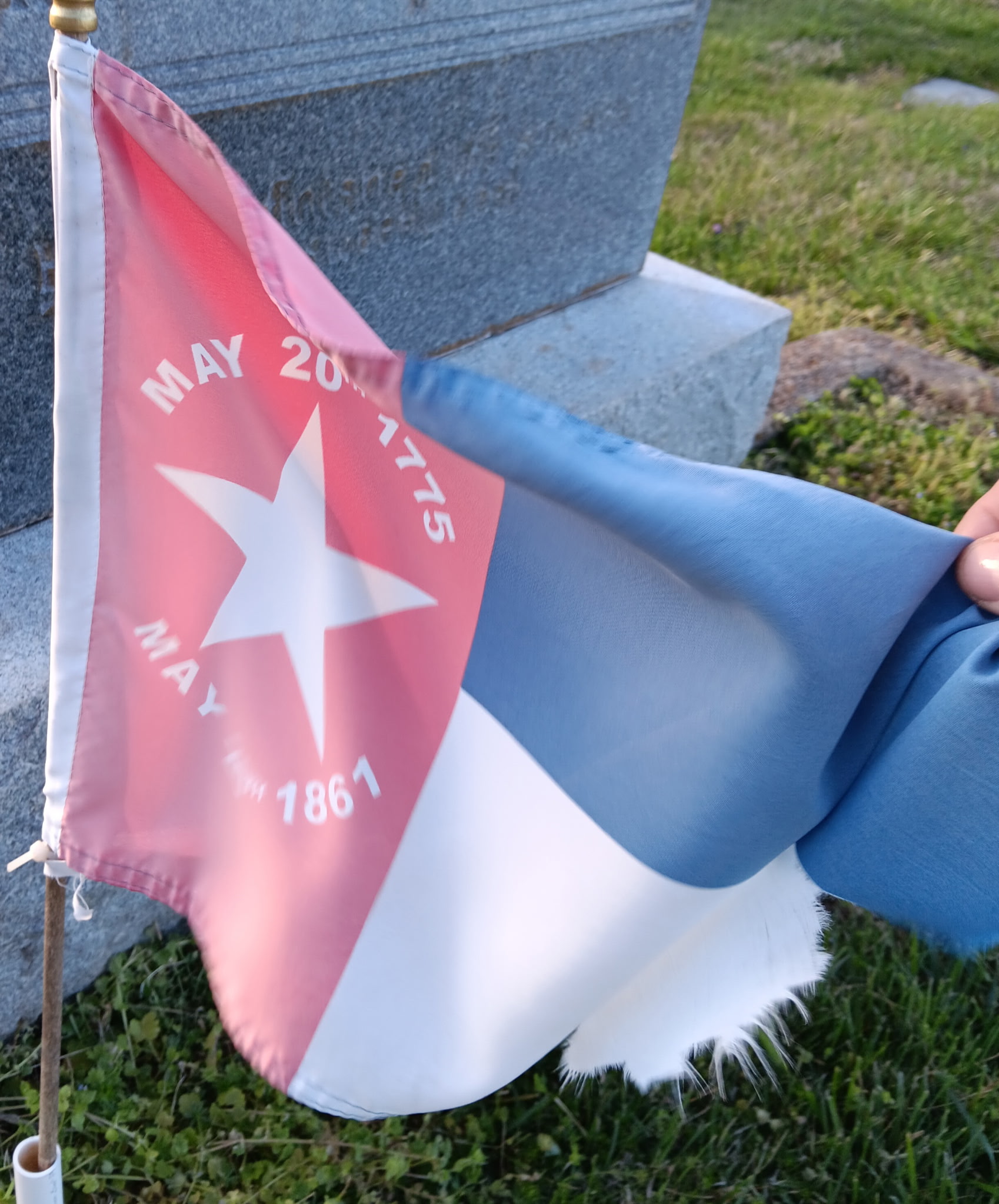
What caught my attention Saturday in that churchyard were faded little flags next to certain old gravestones. They were neither U.S. flags like the ones that sometimes mark the graves of American military veterans, nor, thankfully, those divisive Confederate battle flags — you know, the ones that MAGA insurrectionists waved in the Capitol on January 6th.
It wasn’t immediately apparent due to their weather-worn condition, but these little snatches of cloth were replicas of the official flag of North Carolina after it seceded from the Union in 1861. The small flags bear two dates: the date of arguably our nation’s first declaration of independence — in Mecklenburg County, N.C., a year before the Continental Congress did so in Philadelphia, Pa. — and the date that our state joined the Confederacy. All I knew Saturday was that the flags quietly marked the graves of Confederate veterans.
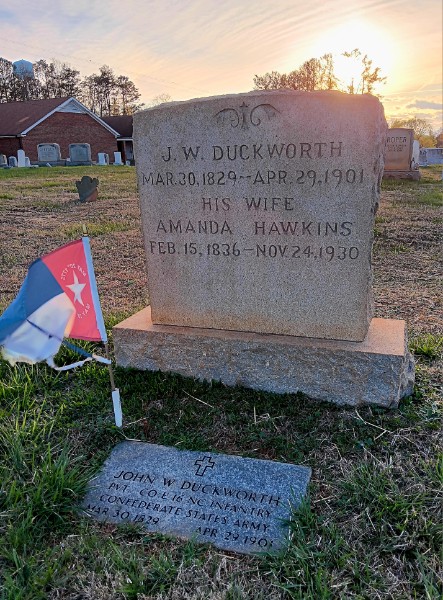
That got me to thinking: Should Confederate soldiers — rebels — be commemorated in the same manner as other American soldiers? Is my “Southern heritage” something honorable, or should I be embarrassed, maybe even ashamed of it? Should I look with pride at the Confederate monument on the Old Courthouse Square at the center of my hometown? Or should I support its removal to a less significant spot, like to a cemetery or museum?
At least one of my maternal grandfathers — John W. Duckworth (1824-1901), who was Grandpa Tom’s father — fought for the Confederacy in the Civil War. His name is chiseled on that monument. He was a member of Company E, the 16th N.C. Infantry Regiment, called the Burke Tigers (just like the old Salem High School mascot). He fought in all the major battles beginning with 2nd Bull Run — name a big one and he was there. He is buried at Salem Methodist Church.
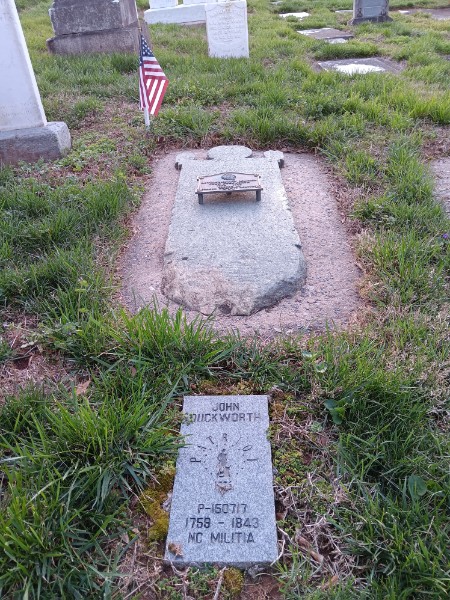
Compare John W.’s service to that of his grandfather — another John Duckworth (1764-1839) — who was a patriot soldier in the American Revolution. The elder John was wounded at the Battle of Ramsour’s Mill near Lincolnton; however, with his arm in a sling, he still fought a few months later with the Overmountain Men in the Battle of King’s Mountain, a patriot victory that turned the tide of the war in the South. He’s buried at the First Presbyterian Church in Morganton.
Both of those grandfathers of mine were called rebels, but one fought to preserve the institution of slavery — truly a lost cause that deserves no respect — while the other strove to free our new nation, a fledgling democracy, from the tyranny of a king. Yes, both men were rebels, but were both of them heroes? What do you think?
Right now, after gathering and reading scads of information new to me about my grandpas from various online sources, I’m not sure I can answer that question or, for that matter, any of the other questions I posed a few paragraphs back.
But next week I’ll give it a try — on all counts.