
By RAHN ADAMS
MORGANTON, N.C. (Dec. 24, 2025) – No, I’m not going to criticize my wife Timberley here on Christmas Eve, not until after we open our presents, anyway.
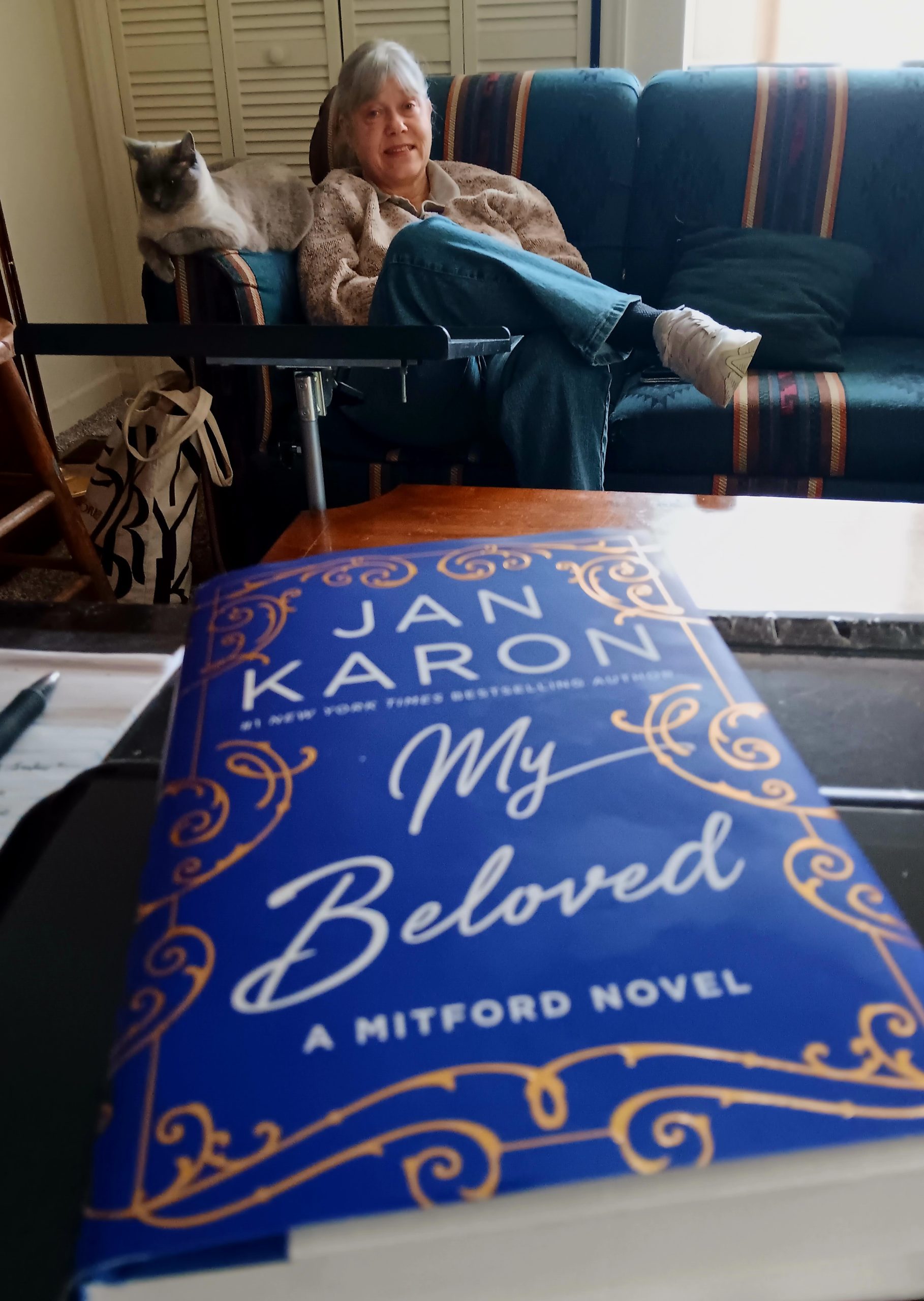
This is a brief review of Lenoir native Jan Karon’s latest Mitford novel, My Beloved, which I just finished reading aloud to Timberley as one of my gifts to her this holiday season. As I discovered in reading the heartwarming story, my gesture was like a common thread running through the book.
Actually, this is the second present my beloved wife and best friend has gotten early this year. The other one was The Chicken Encyclopedia for her to use with the children’s book she has started working on. Yeah, I know. I’m so romantic, huh?
But back to My Beloved. Over the past four decades, Ms. Karon, 88, has written 25 bestselling books, 15 of which are novels set in the fictional mountain village of Mitford. Her faithful readers—like Timberley—know that Mitford is really Blowing Rock, N.C., the Watauga County town where Ms. Karon lived for 10 years.
She moved to Virginia around the time that Timberley and I took teaching jobs at Watauga High School after our own 10-year sojourn, but on the N.C. coast. To my knowledge, our paths never crossed in Blowing Rock or Boone.
Or in Lenoir, where both Ms. Karon and I were products of the Caldwell County public school system—her, in and around the town of Hudson; me, at Happy Valley Elementary and Hibriten High. She credits her first-grade teacher, Nan Downs, with encouraging her love of reading and writing.
I must have been a late bloomer, because the educator who turned me on to reading and writing was Shannon Russing, my 11th-grade English teacher. I hope she knows how much I still appreciate the encouragement she gave me, a shy 16-year-old struggling to find my place among more privileged and confident peers.
As I think back on that 11th-grade English class, I’m not exaggerating to say that I have only positive memories of the lessons in Ms. Russing’s classroom. If anything bad happened, I don’t remember it.
That isn’t the case, however, with my other high school English classes, where the two teachers—one an abusive man, the other an overly strict woman—managed their classrooms through fear. They started out tough to get us kids under control, and they rarely let up.
One thing I did learn in those bad classes, though, was what not to do as an English teacher myself later on.
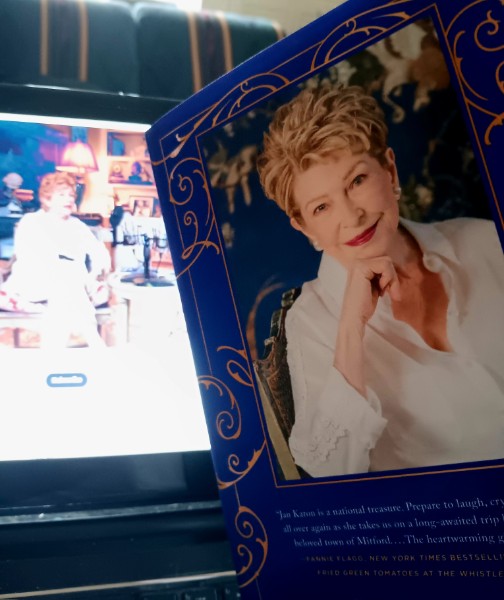
I wonder if Jan Karon had any bad English teachers in Hudson or Whitnel or Charlotte when she was growing up.
Did any of her teachers embarrass her in class on a daily basis over her family background, something she had no control over?
Did she ever get paddled for no good reason at all, as if a teacher should ever strike a student?
Did any of her composition teachers give her more hang-ups than writing tips, more self-doubt than pride?
Can she dash off a rough draft without worrying about using the same word twice in the same paragraph or about starting two consecutive sentences the same way?
Can she ever let a piece of writing go without waking up in the middle of the night and wanting to rewrite it?
Or is all that just me?
Of course, maybe that type of instruction made me a better writer in the long run.
Maybe I should be thankful for everyone who made me the writer I am and the person I am, with my strengths and weaknesses, my virtues and flaws.
But this is supposed to be an honest, albeit brief review of Ms. Karon’s novel, My Beloved. If you’ve read this far, you’ve gotten a taste of the kind of topics in this latest Mitford novel.
It’s about community, of course, and about family.
It’s about appreciating other people for what they bring to the table, both figuratively and literally during the holiday season, and for what they choose to leave at home so that we all don’t have to deal with the same pain over and over and over again.
It’s about trying not to be judgmental, even when the tenor of our times is to be judge, jury and executioner, all in one.
It’s about communication—how the written, especially the handwritten word can be more powerful than any arrangement of colorful pixels on any screen.
And, in the end, it’s about the importance of Grace, with a capital G.
Sure, Ms. Karon’s frequent use of pronouns without proper antecedents and her choice to use single quotation marks around dialogue in the British style often made my task of reading her book aloud in the various characters’ country dialects (with apostrophes to show dropped sounds) much more difficult.
Her characters don’t use profanity, but this reader did a number of times when I misread one character’s dialogue in another character’s voice and had to stop and start again.
I could also quibble about some character- and plot-related issues in this 400-page novel, but none of those criticisms would be enough for me not to recommend the book to you.
As a work of fiction, the value of My Beloved far exceeds what it owes in literary style or to current trends that tear us down rather than build us up as Ms. Karon always has.
To paraphrase my favorite English teacher’s first words of encouragement to me all those years ago, the many voices in this affecting novel express themselves well in writing.
Thank you, Ms. Karon. Thanks again, Ms. Russing. And God bless us every one on this Christmas Eve.
[Note: The following are links to recent media stories and interviews with Jan Karon about My Beloved on CBS Sunday Morning and Our State magazine’s book club podcast.]