
EVENSONG 79

Of the 79 psalms I’ve read so far, this one is the most difficult to write about — and not because it’s too repetitious or too simplistic or, in the case of the 23rd Psalm, too familiar. This one could have been written yesterday — well, any day after Oct. 7, 2023, really. It hits too close to home.

This psalm’s subtitle is “A Dirge and a Prayer for Israel, Destroyed by Enemies.” It’s another one of Asaph’s works. You know, it occurs to me this instant that Asaph might also have authored — or edited, at least — the Book of Ecclesiastes. Maybe this poet was King Solomon’s ghostwriter.

That’s just uneducated speculation — I mean, I haven’t even consulted Professor Google about it yet — but back in the day when I was a teacher, I could recognize a student’s word-processed essay without even seeing their name. It wasn’t just their errors; it was usually their unique style.

What makes this psalm so relevant is the bloody picture that the poet paints of the same kind of death and destruction that Israeli settlers and Gazan civilians have seen over the past 74 days. For the massacre, Asaph doesn’t give us a reason, not even “For everything there is a season.”

EVENSONG 78

Like an old-time ballad singer, Asaph turns to storytelling in this psalm. It’s the second longest of all the psalms — some 72 verses spread over five pages — as it recounts “dark sayings of old, / Which we have heard and known, / And our fathers have told us,” stories that can’t be forgotten.

It’s not unusual for ballads — or story songs — to be lengthy. I remember seeing all the words to “Matty Groves” once and wondering how John Jacob, Jean, Joan and Doc could ever memorize all those verses and then sing the whole blessed song without dropping a single quatrain or two.

Well, Asaph does tell a familiar tale — one that’s a staple in everything from Jewish synagogues to Southern Baptist Sunday schools. He tells how the Children of Israel — or more precisely, the tribe of Ephraim — kept pissing YHWH off and, as a result, had to keep wandering in the desert.

Nothing YAH did for them was enough, sings Asaph. Part the Red Sea, YAH! Yes, my children. Show us the way by day and by night, YHWH! OK, sure, I shall. We thirst, YAH! We want water! I can do that, too — on the rocks, even. And food! We’re hungry! Sure, here’s manna and meat.

Still, those children kept acting like children and never learned their lessons. They’d forgotten all the bad stuff — those 10 plagues — that YAH had used to get the Egyptians to set the Israelites free — like killing every firstborn child. (Yes, YHWH waited until they were born to murder them.)

So, just like “Matty Groves,” this story psalm is a murder ballad of sorts. But Asaph’s main point in telling it transcends macabre entertainment. Asaph knows that people who forget the morals of their collective stories will surely repeat them — that is, their mistakes — over and over again.

EVENSONG 77

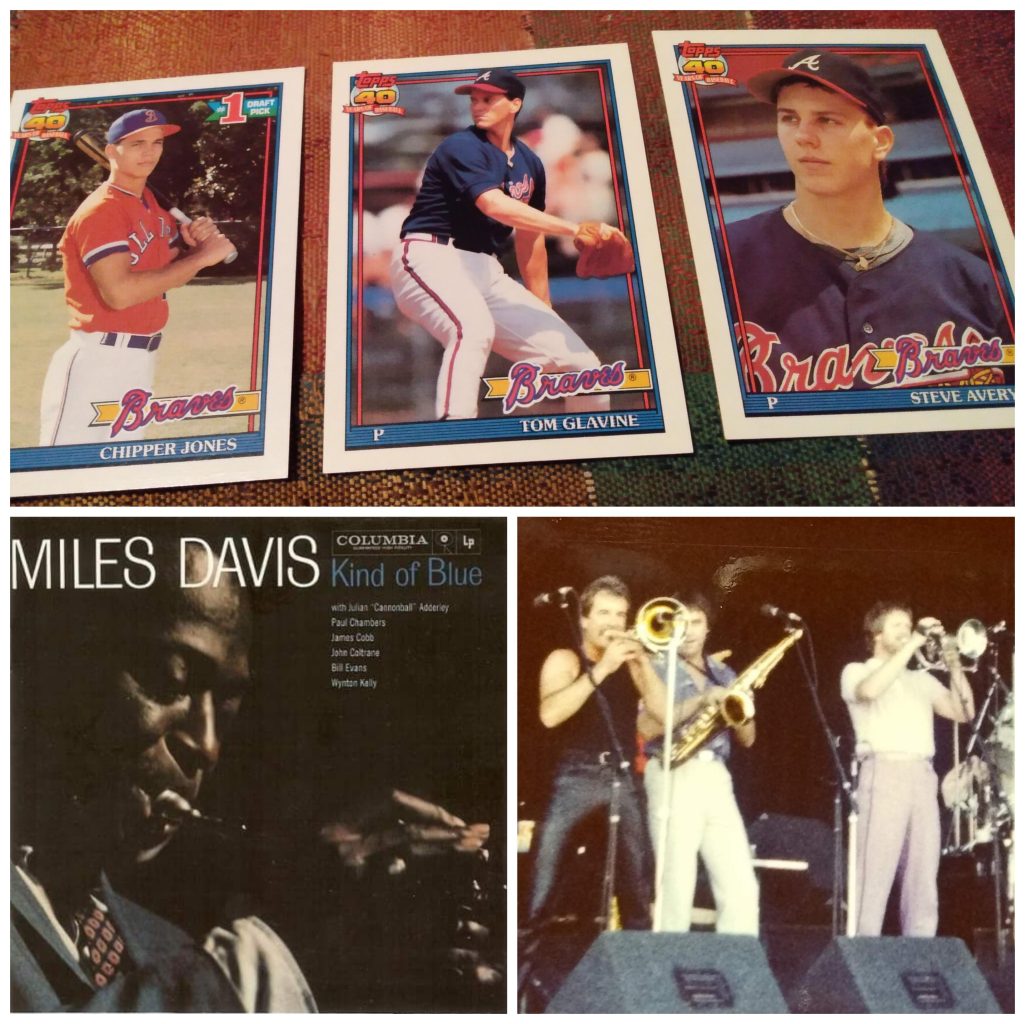
I want to know more about this man Asaph, a singer-songwriter in the courts of King David and King Solomon. That was my teenage dream — to make a living writing popular songs and, like one of my heroes, to tell the Queen to applaud by rattling her jewelry. She was a really fine girl.

Asaph starts this psalm with a couple of night images — “My hand was stretched out in the night without ceasing; / My soul refused to be comforted”; and then “I call to remembrance my song in the night; / I meditate within my heart, / And my spirit makes diligent search.” Asa’s night moves.

He points out that YHWH keeps him alive — “You hold my eyelids open” — but just prolongs his suffering by not extending him the grace granted to others. Talk about a hard day’s night. Asaph refers to Jacob and Joseph, to Moses and Aaron, to the Children of Israel, even to fictional Job.

My boy ends this psalm with cleansing water references and the image of a great storm — “The voice of Your thunder was in the whirlwind; / The lightnings lit up the world; / The earth trembled and shook.” I guess he’s saying we gotta go through some real shit before the sun shines again.

For as much as I’ve come to despise David from reading psalms attributed to him, I like this guy named Asaph who had the balls to write honest lines of verse like this. Reading his song lyrics, I get the feeling that he didn’t care if we’d feel like smiling or crying, as long as we feel something.

EVENSONG 76

If I were grading Asaph on creative writing, he’d get an A-plus. I don’t really like what he says, but I love how he says it. He’s Bob Dylan backwards or John Lennon on the Mystery Tour bus.

Asaph states that YHWH “broke the arrows of the bow, / [and] The shield and sword of battle,” and that “[b]oth the chariot and horse [He] cast into a dead sleep” — antiwar claims, you know.

Asaph says to fear neither armies nor rulers as oppressors — that YHWH is greater and more fearsome. But there’s still YAH’s anger and wrath. So instead of divine solace, godly stressors.

EVENSONG 75

Unlike the other psalmists, my boy Asaph doesn’t mind writing dialogue for YHWH. No, he won’t say his name — it’s too sacred — but he’ll put words in YAH’s mouth. I noticed that fact back in the 50th Psalm, although Asaph made YHWH sound like a big, bad bully, and turned my opinion of them both due south.

That’s how it is with YHWH or Jehovah. He’s angry and jealous. He demands that all his followers obey rules (or not) and that they sacrifice living things and their own lives to Him, if He so chooses. He says, “Thou shalt not kill,” but forgives murder, even genocide, if his followers are devout or overly zealous.

Asaph warns us that “God is the Judge: / He puts down one / And exalts another. / For in the hand of the Lord there is a cup, / And the wine is red; / It is fully mixed, and He pours it out; / Surely its dregs shall all the wicked of the earth / Drain and drink down.” Drunk we become. Then our time’s up. And we’re dead.

EVENSONG 74

This is definitely a different writer from the one who pens the most annoying psalms — you know, the whiny ones that keep getting on my nerves and couldn’t be much triter.

Again, Asaph gets the writing credit, and he shucks down the corn — as any poet worth their salt and full of pepper would do — with pointed words like you’d see on Reddit.

Using references to many a natural wonder, Asaph asks YHWH why, if He’s so all-fired powerful, YAH doesn’t smack down bad people and cast all their lying asses asunder.

“Remember,” Asaph basically says, “they’re the actual fools. They’re the ones who don’t believe in you and laugh behind your back. They’re the ones who break all your rules.”

And then Asaph calls YHWH out. “Arise, O God,” he implores, “plead Your own cause” — that is, unless YAH just likes to pout or knows the comedic value of a well-timed pause.

EVENSONG 73

This psalm was written by Asaph, who was either a temple musician or songwriter for the house band. He’s credited with writing a dozen psalms, which back in the old days would have been an album’s worth of songs, six tunes per side. So far I like Asaph. As for King David, I have qualms.

Asaph must have been a bass player. Aren’t they always the easiest-going ones, standing off to the side as they lay down their funky grooves? Or maybe he was a drummer, perched up on his trap set’s throne in back, watching for a signal from the lead singer, the dude with all the moves.

In this psalm (and in his first hit that debuted at No. 50), Asaph notices that bad people seem to thrive in life, while good people seem to suffer more. He doesn’t understand why YHWH allows this to be, until one day this sideman lays down his ax (or his sticks) and knocks on YAH’s door.

He slips into “the sanctuary of God” and — BAM! — he’s hit between the eyes with the power of the universe whose nature from him had always been hid. In its most fearsome aspect — as the great YHWH — the iSoul says, “I’ll make things right. All you gotta do is sing a mean tune, kid.”

EVENSONG 72

This is “A Psalm of Solomon,” not of David — the first one I’ve noticed so far. But its 20th and final verse also calls this meditation “the prayers of David, the son of Jesse.” So, this psalm is about fathers and sons, tearful regrets and wide-eyed hopes, torn pages and second chapters.

David starts by basically saying, “I’ve done so much wrong, YHWH, but my boy does stuff right. He will be good for all of our people, especially for the poor, the needy, the oppressed. His wise rule will bring lasting peace to our land, and we will be the envy of the world as we now know it.”

Isn’t that how it should be? When loving parents, caring teachers, selfless mentors look back in their rear-view mirror and see how rocky the road taken has been, they will stop the car and ask their young riders, “Pick us a new route, and we’ll go wherever you say. It must be a better way.”

EVENSONG 71

Not even halfway through the book of Psalms, I have had about all of King David’s ego that I can stand. Charles Spurgeon’s comments on these psalms also annoy me to beat the band.

In this longish psalm, David brags that he is a “wonder to many” and that YAH is his “rock,” because when Dave grows old and gray, YAH won’t throw him out like a mismatched sock.

Yes, my rhyming can be quite wince-inducing, just like the apologetics of the Rev. Spurgeon. YAH “shall increase my greatness,” says Dave, whose pride stinks like a big, rotten sturgeon.

EVENSONG 70

Only five verses in this psalm. “I’m in a hurry, Lord,” says David. “Save me quick, and hurt those mean folks good.” The same old story, except that David is “poor and needy.” Right.