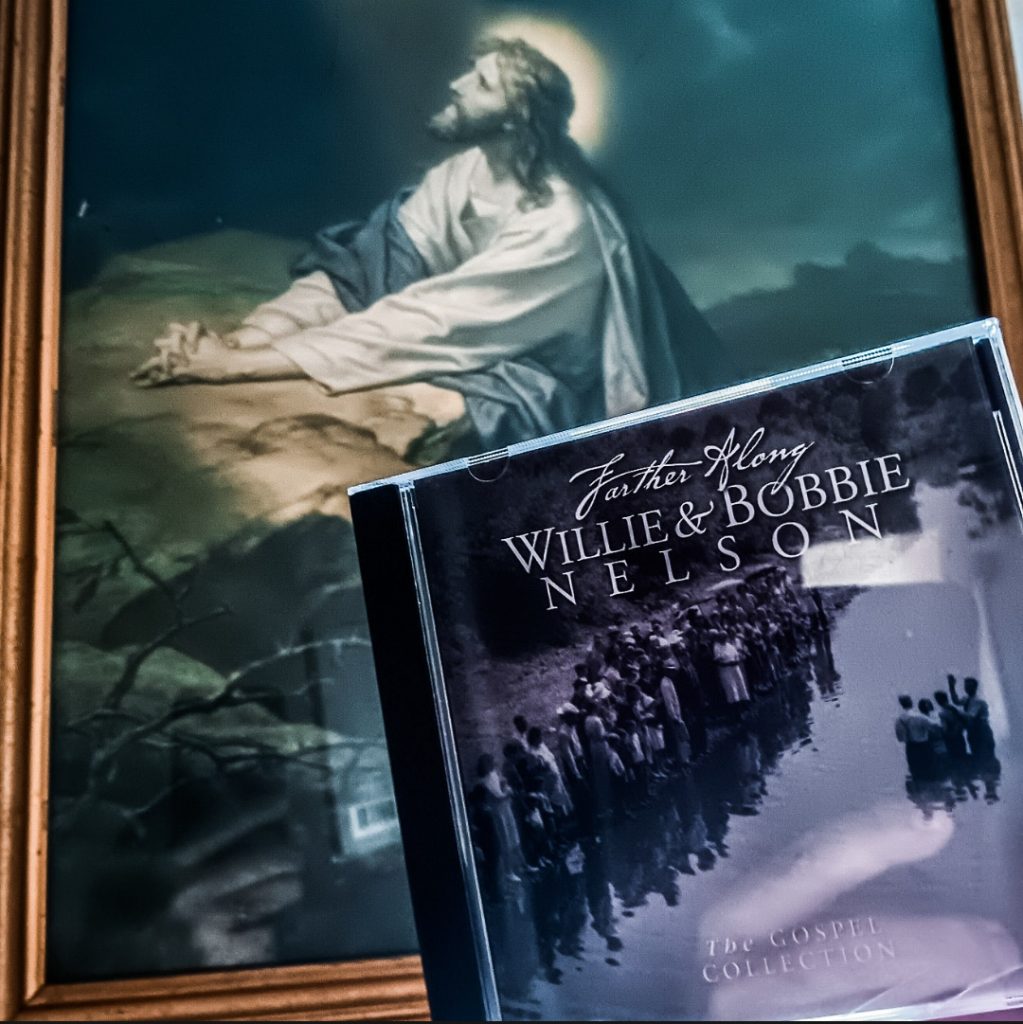
This is the psalm I’ve been waiting for — dreading, even. It’s special, though not my favorite, by any measure. It’s like the day someone close to you died. Or the day an unlucky man was born.
One verse is familiar to those of us who’d rise and shine every weekday to Arthur Smith’s “Top of the Morning” radio show: “This the day the Lord has made; / We will rejoice and be glad in it.”
In my mind’s ear, I hear the old “Guitar Boogie” man singing that verse — well, an older version of it, anyway, and in his Southern drawl. In my mind’s eye, I spy my family at the breakfast table.
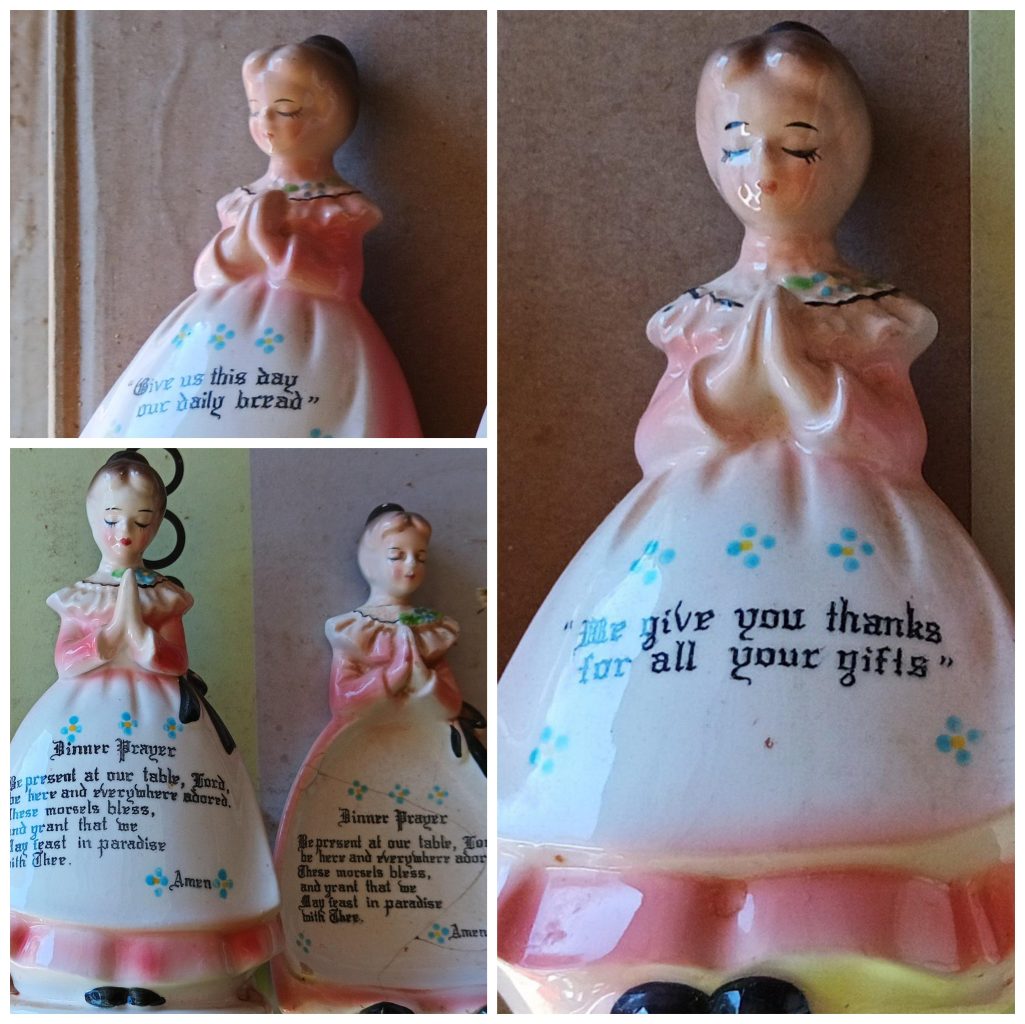
From there we’d move to the den where my dad would share “Our Daily Bread” — no, not more toast and jam, more like “Green Eggs and Ham” — our little booklet of daily devotional readings.
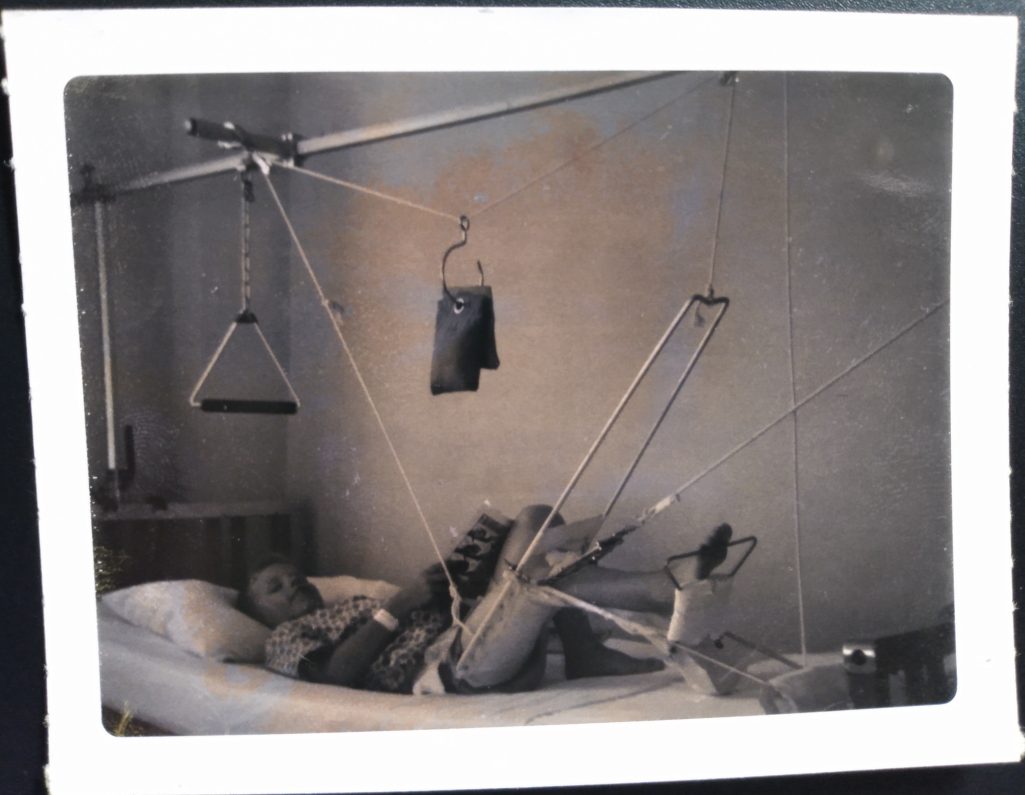
Each day’s devotional consisted of a short Bible reading, a brief commentary and a “Thought for the Day.” Until I spent six weeks at Grace Hospital, that’s how every day of my childhood began.
And then, years later, it was my younger brother’s turn — to spend weeks away from home and in the hospital, that is. He wasn’t in traction, though, like I’d been. But his case was much worse.
On the dark morning of his first surgery, I was alone at home. Our mom was with Ken at Baptist Hospital. Our dad was in the car on his way to Winston-Salem. I would go there later in the day.
I don’t remember what I ate for breakfast that morning, if I ate anything at all. But I do remember what I read instead of “Our Daily Bread.” I opened my Bible to the 17th verse of this very psalm:
“I shall not die, but live,” the psalmist says, “[a]nd declare the works of the Lord.” Later I learned that my mom and little brother had picked the same psalm at random that morning, just as I had.
As we’re wont to do, I took it as a sign — as a promise, even. I wanted so badly for my innocent little brother to live and to walk again, and to beat the damned disease that was eating him alive.
But, no. He survived that surgery and two other operations over the next three months. But this athletic boy never walked again, not after the radiation zapped him and the poison sapped him.
Now at 64 — getting older, losing my hair — I look back on that morning in the fall of 1976, and I see that my 17-year-old self was right to read those words with hope. For it was really about me.
This psalm is easy to understand. The psalmist speaks as a man who was close to death, who prayed to his god for healing, and who then survived whatever physical malady he had suffered.
The superstitious speaker believes that if he hadn’t cried out for mercy, he would have died; and he pledges to forevermore praise the supreme power — YHWH — that he thinks spared his life.
My question now is the flip side of that old coin toss of the gods — you know, our expectation of either reward or punishment for our behavior on earth. Has good and bad ever really mattered?
I’m sure that question sounds silly to fundamentalists who are counting on an afterlife in heaven. But my real question is, why then do good things happen to “bad” people who never, ever pray?
This is the strangest psalm I’ve read so far — comparing Old Hebrew YHWH to the idols worshiped by everyone else in that ancient world back then.
These other gods are described as statues of “silver and gold, / The work of men’s hands,” without the senses whose organs this psalmist lists in detail.
“Those who make them are like them,” quips the poet. “So is everyone who trusts in them” — that is, with no sense at all, the wry writer must mean to say.
“But our Lord is in heaven,” the psalmist adds. “He does whatever He pleases.” Now, I’m not sure if that remark refers to YHWH’s independence or person.
Is the writer saying that YAH does have a working mouth, eyes, ears, nose, hands, feet, and throat? Is His body like that of an earthly man? And if so, why?
How great is YHWH? According to this psalmist, “He raises the poor out of the dust, / And lifts the needy out of the ash heap, / That He may seat [the poor man] with princes.” Is that a fact?
This psalm is another example of religious idealism that’s out of touch with reality — in other words, when what should happen to good people is the exception, not the hard and fast rule.
Like many other psalms, this one promises rewards to the righteous person who keeps YAH’s commandments. Do that, says the songwriter, and your “descendants will be mighty on earth.”
And here is the Prosperity Gospel: “Wealth and riches will be in [the righteous person’s] house,” not promising us pie in the sky, but letting us have our cake here on earth (then eating it for us, too).
I’ve watched prosperous preachers on TV, and even seen one white-suited healer live and in all of his glory. They must be righteous. But the desperate folk passing them the loot? Nah, not so much.
BOONE, N.C., Feb. 5, 2024 — A Western North Carolina couple have co-authored the first installment of a new young adult series of sports novels.
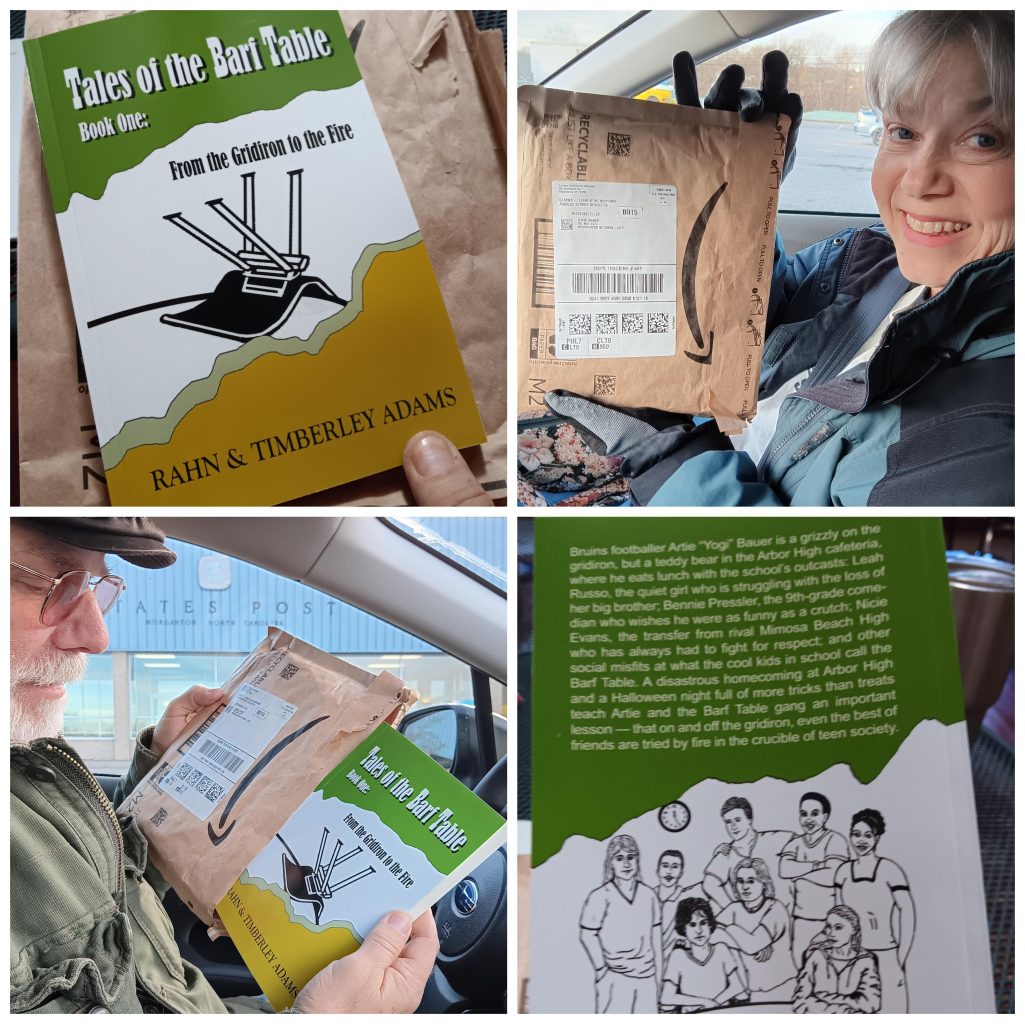
Rahn and Timberley Adams of Boone and Morganton last week released Tales of the Barf Table, Book One: From the Gridiron to the Fire, published independently by Gaillardia Press. This is the couple’s second young adult novel, coming 20 years after publication of Night Lights; or, Golf, the Blues and the Brown Mountain Light (Parkway Publishers 2004).
“We’ve been working on this book for the past year,” said Mr. Adams, “and we’re really pleased with it — the uplifting story, its diverse characters and the humorous tone in the right places, but especially its themes of being a good team member on the playing field and an even better role model for younger teens off the field.”
From the Gridiron to the Fire focuses on a group of high school athletes and their friends during fall football season at fictional Arbor High. On Friday nights, Artie “Yogi” Bauer is starting center and co-captain of the Arbor Bruins. The big farm boy leads every day at school as well by eating lunch with younger and less popular students at what the cool kids call the Barf Table.
From the novel’s back cover: “A disastrous homecoming at Arbor High and a Halloween night full of more tricks than treats teach Artie and the Barf Table gang an important lesson — that on and off the gridiron, even the best of friends are tried by fire in the crucible of teen society.”
The young adult novel is for ages 13-18 and focuses on gridiron football. However, readers of all ages and genders can enjoy the story without extensive knowledge of either the popular sport or the creative lunchtime hijinks that occur in many high schools.
The 256-page trade paperback includes cover art and chapter illustrations by Ms. Adams, who also co-wrote and illustrated Night Lights, as well as two books of her own: children’s picture book, Turtle Beach (Gaillardia Press 2019); and young reader’s chapter book, Henry Heron Finds His Home (Gaillardia Press 2021).
“We’re trying to build our imprint’s catalog,” Ms. Adams said. “This is the third book of fiction by Gaillardia Press in five years. We’re hoping to expand into poetry and nonfiction either this year or next, and we expect to release a 20th-anniversary edition of Night Lights by year’s end.”
She added that Gaillardia Press plans to release Book Two and Book Three in the Tales of the Barf Table series over the next two years. The second installment focuses on winter sports at Arbor High, while the third book is set during the school’s spring baseball and softball seasons.
The Adamses are currently employed part-time by Appalachian State University — Mr. Adams, as a professional writing consultant for the University Writing Center; Ms. Adams, as an adjunct instructor in the Career and Technical Education Program. Both retired after full-time teaching careers in Watauga and Brunswick counties.
Mr. Adams also coached high school basketball at West Brunswick High School, as well as men’s and women’s varsity tennis at West Brunswick and Watauga High School, earning four conference tennis coach-of-the-year awards. He also served as on-field statistician for West Brunswick and Watauga football teams. Ms. Adams was assistant tennis coach at both schools.
Mr. Adams is a graduate of Lenoir Hibriten High School and the University of North Carolina at Wilmington. Before becoming a teacher, Mr. Adams worked as staff writer and photographer for The Valdese News in Valdese and The Brunswick Beacon in Shallotte; as a columnist for Focus magazine in Hickory; and as an award-winning radio news director at WMNC in Morganton.
Ms. Adams attended Morganton Freedom High School and graduated from Appalachian State University, earning both a bachelor’s degree and master’s degree. Prior to her teaching career, she won numerous advertising awards at Belk of Morganton and The Brunswick Beacon.
A lifelong artist, Ms. Adams also was owner and operator of Kindred Spirits Gallery & Shop at Ocean Isle Beach in the mid-1990s. She has issued four limited-edition prints, including “Kindred Spirits,” “Sunflowers,” and “Gazebo at Sunset,” all of Brunswick County coastal scenes; and “Billy Joe’s Tee,” depicting a mile-high view from atop North Carolina’s scenic attraction Grandfather Mountain that was used as cover art for the couple’s Night Lights novel.
Tales of the Barf Table, Book One: From the Gridiron to the Fire is available online at Amazon and Barnes & Noble, and at local bookstores through IngramSpark publishing and distribution.
The Adamses’ are available for book signings, workshops and other special appearances. For more information, visit the couple’s website at gaillardiapress.com or contact them at P.O. Box 1382, Boone, NC 28607.
I’m gonna read this psalm like a contemporary of David, not of Donald. When this song was written, Yeshua Bar Yosef wouldn’t be born for another thousand years, so calling the psalm prophecy — as Spurgeon does — is a stretch.
“The Lord said to my Lord, / ‘Sit at My right hand, / Till I make Your enemies Your footstool.’” Spurgeon says that’s a reference to Jesus as messiah, and the preacher gives the vain king credit for actually writing this “Psalm of David.”
But, through my eyes as a regular reader, I see this psalm as having been penned by a royal toady who knew what the king wanted to hear. “My Lord” in that first line and later on refers to King David himself, not to Spurgeon’s Jesus.
That is, unless our gentle, forgiving Jesus is capable of murder: “He shall execute kings in the day of His wrath. / He shall judge among the nations, / He shall fill the places with dead bodies, / He shall execute the heads of many countries.”